The Coming of Age of a Dutch Icon: The History of the DAF 55 (1967-1972)
In Dutch automotive history, the DAF 55 occupies a special and crucial place. While earlier DAF models—an abbreviation for Van Doorne's AutomobielFabriek—such as the 600, the 750 and the Daffodil—had introduced the world to the revolutionary Variomatic transmission, these cars were often still seen by the general public as city cars for older people or for those who had difficulty shifting gears. The DAF 55 was meant to change that. It was the car that brought DAF onto the motorway, launched it into motorsport, and transformed the brand from a likeable niche player into a serious manufacturer of family cars. Our article describes the complete history of the DAF 55: from the technical necessity to the cooperation with Renault, Michelotti’s timeless design, the glorious successes in endurance rallies, to the eventual takeover by Volvo. This article is enjoyable to read for DAF enthusiasts, but also for those who want to learn more about the creation of the DAF55 as a model.
The Run-Up to the DAF 55: The Limitations of the Two-Cylinder
To understand the importance of the DAF 55, we have to look at the situation in Eindhoven in the mid-1960s. DAF had success with its passenger cars, but ran into a technical and image-related ceiling. The models up to that point were powered by air-cooled two-cylinder boxer engines. Although these engines, produced in-house by DAF, were reliable and simple, they simply did not deliver enough power to keep up with the increasingly fast traffic on the emerging European motorways.
In addition, DAF had the stubborn image of being “frumpy.” The cars were jokingly referred to as “granny shakers with garter-belt drive.” Hub van Doorne and his team knew that if they wanted to survive among giants such as Opel, Ford and Volkswagen, they had to build a car that was fully fledged, fast and comfortable.
The DAF 44 as an Intermediate Model for the Launch of the DAF55
In 1966, DAF introduced the DAF44. In terms of bodywork, this was an enormous step forward. The Italian master designer Giovanni Michelotti had drawn a beautiful, modern body that was much larger than the Daffodil. However, under the bonnet there was still a two-cylinder engine, bored out to 844 cc, but with 34 hp (29 hp DIN) still not a powerhouse. The DAF 44 was a beautiful car that longed for more power. The basis was there, but the heart was still too weak.
The Birth of the DAF 55: A Franco-Dutch Alliance
Developing a completely new, water-cooled four-cylinder engine was too expensive and time-consuming for a relatively small manufacturer such as DAF. The board in Eindhoven therefore decided to look for a partner. Various manufacturers were considered, but ultimately the choice fell on the French state-owned company Renault.
Renault had the 'Cleon-Fonte' engine: an extremely reliable, compact and powerful powerplant that had already proven its worth in models such as the Renault 8 and the Renault 10. DAF chose the 1108 cc variant. This engine delivered 50 hp SAE (44 hp DIN), which was a significant leap compared to the 34 hp of the DAF 44.
DAF 55: Technical Challenges
Implementing this engine was not a simple 'plug-and-play' operation. The DAF 44 had been designed for an air-cooled boxer engine, which was flat and wide. The Renault engine was a water-cooled four-cylinder inline engine, which was taller and longer.
The engineers had to modify the front of the car. Where the DAF 44 had a closed nose (after all, air cooling does not require a radiator at the front), the DAF 55 received an open grille to provide the radiator with fresh air. The suspension, especially the torsion bars at the front, also had to be reinforced to carry the higher weight of the cast-iron engine and the cooling system.
In addition, DAF’s pride, the Variomatic, had to be adapted. The continuously variable transmission with belts now had to handle much higher torque and power. The construction was made more robust and the gear ratios were adjusted to the character of the Renault engine, which delivered its power at different engine speeds than the old boxer engine.
The Launch of the DAF 55 and the Design (1967/1968)
At the end of 1967, the DAF 55 was shown internally and to the press; the official market introduction followed in March 1968 at the Geneva Motor Show. It was a milestone. For the first time, there was a DAF that not only kept up in city traffic, but also held its own in the left lane of the motorway. With a top speed of around 136 km/h, it was a serious competitor to the Opel Kadett B, the Volkswagen Beetle 1300 and the Ford Escort.
DAF 55: The Michelotti Signature
The exterior of the DAF 55 leaned heavily on the design of the 44, but with subtle differences that gave it a more ‘mature’ appearance. The grille at the front was the most striking feature, fitted with the DAF logo and a chrome strip. The rear lights were elongated and horizontal, as opposed to the vertical lights of the earlier models, which made the car look wider.
The interior was neatly finished for its time. DAF positioned the 55 in a higher market segment. The dashboard was clear and fitted with gauges that were easy to read. An important detail in the controls was the introduction of a 'real' floor-mounted gear lever for forward, neutral and reverse. In earlier DAFs, the driving direction was often selected with a lever on the dashboard, but the 55 received a sportier floor shifter (although of course there was no real shifting while driving).
Variants of the DAF 55: Sedan, Estate and the Coupé
DAF understood that to appeal to a broad audience, one body variant was not enough. The 55 line was therefore quickly expanded, resulting in a complete model family. All models can also be viewed in the DAF museum, which is located in Eindhoven, the birthplace of DAF.
The Sedan
The basis of the success. A two-door sedan that was spacious enough for four adults and their luggage. The large boot (partly made possible because the Variomatic was compactly tucked under the rear seat/floor) was a major selling point.
The Combi (Estate)
For the business driver, the small self-employed owner or the young family, DAF introduced the Combi. With a flat load floor and a large third door, this was one of the most practical cars in its class. The rear seat could be folded down, creating a cargo area that was surprisingly large for the car’s exterior dimensions.
The Coupé (1968)
In 1968, a year after the introduction of the sedan, DAF unveiled the 55 Coupé. This was perhaps the masterpiece of the cooperation between DAF and Michelotti. The roofline sloped down elegantly towards the rear, giving the car an unmistakably sporty silhouette. The Coupé was technically identical to the sedan, but was equipped more luxuriously. It received sportier seats, a rev counter (unique for that class at the time) and a more finely finished interior with wood accents or more luxurious plastics.The Coupé was crucial for the image. It was a "lifestyle" car before that term existed. It attracted young, fashion-conscious buyers to the showroom who would previously never have wanted to be seen in a DAF.
Video of Our DAF 55 from the Tonny's Classic Drive Fleet
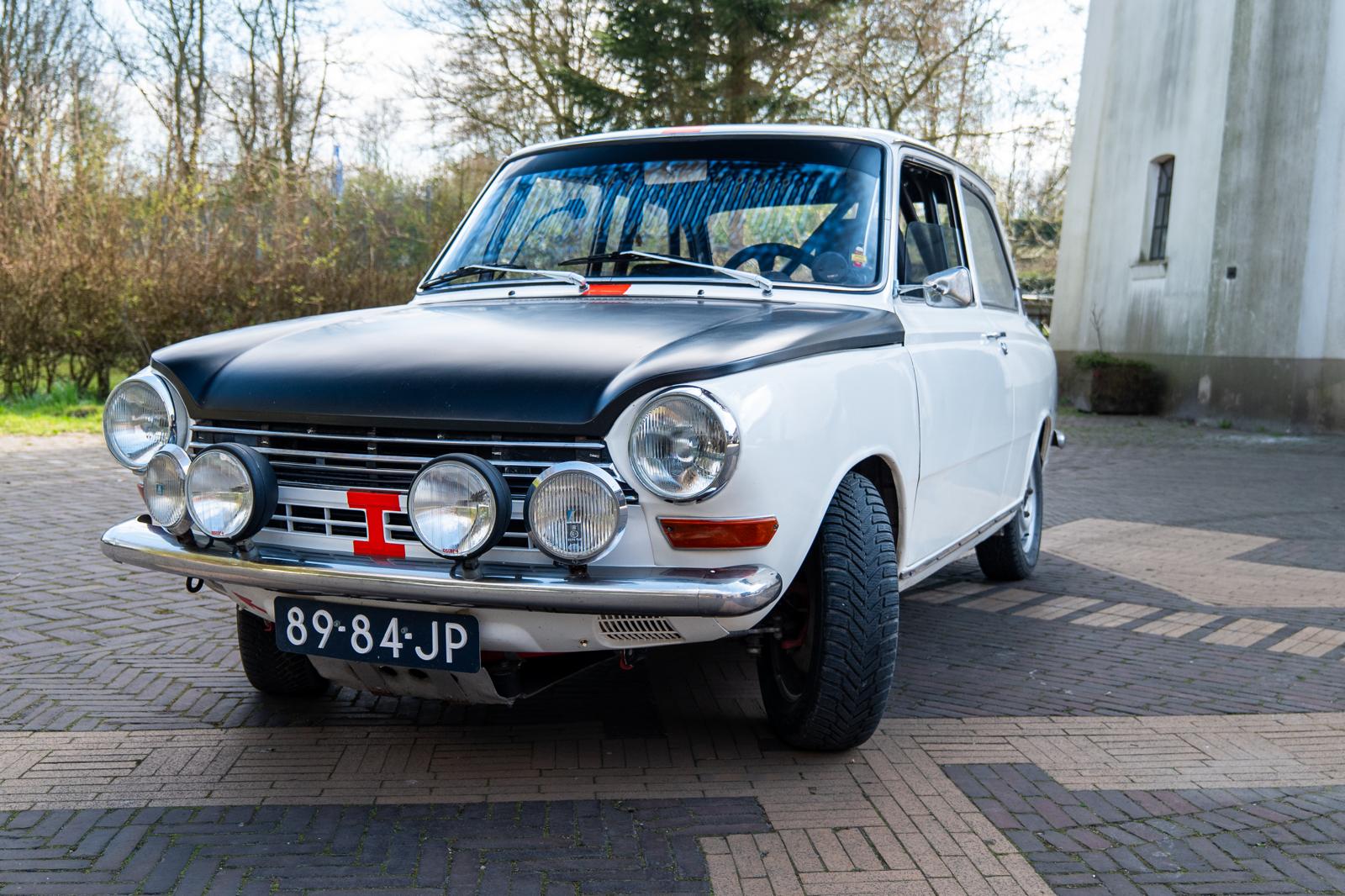
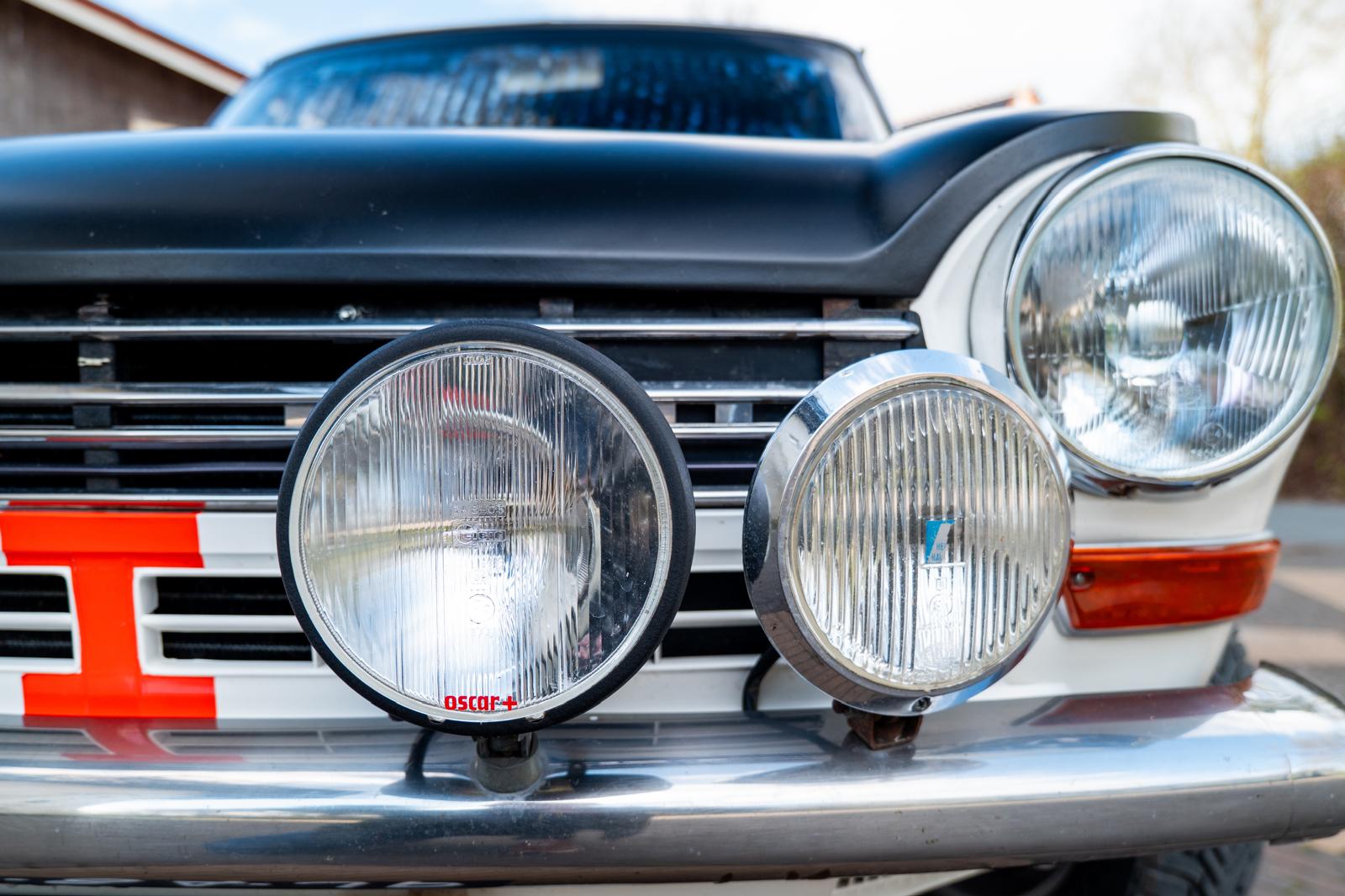
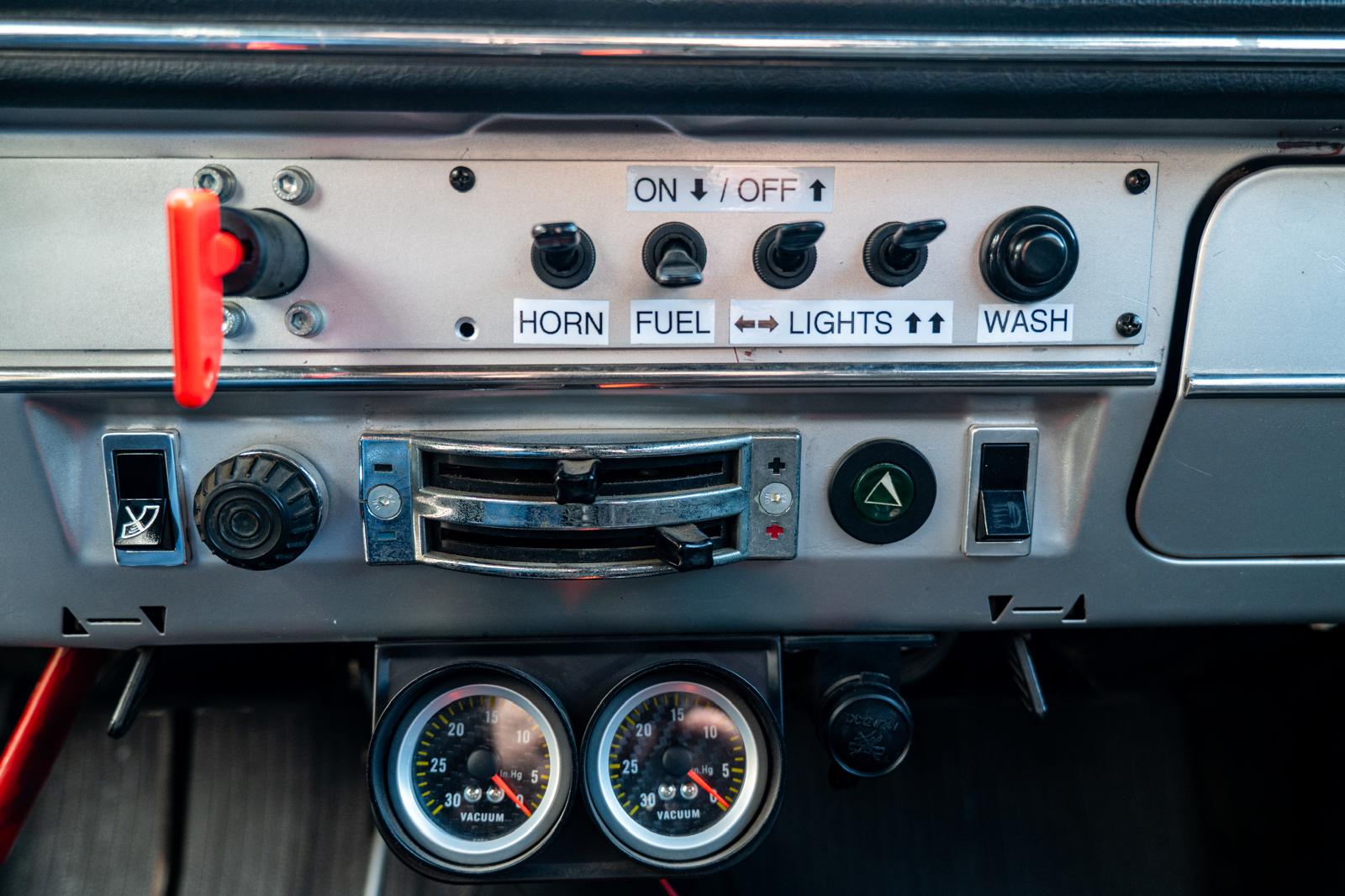
As you can see from the open grille, this is the water-cooled DAF55, model SEDAN, and our DAF came onto the market on 1 October 1969. It is a two-door model and converted into a caged rally car. A truly tough car! The car can be rented for rallies and can be driven by two people. Oh yes, and of course it goes just as fast forwards as backwards thanks to the clever little lever.
The Fight Against the Image: DAF’s Motorsport Campaign
Perhaps the most fascinating chapter in the history of the DAF 55 is the motorsport campaign. DAF management and PR manager Rob Koch knew they could only break the “old wives” image with hard facts. The Variomatic had to prove it was not only comfortable, but also indestructible and fast.
Achievements of the DAF 55 in the London-Sydney Marathon (1968)
The absolute highlight was the participation in the London-Sydney Marathon in 1968. This was a grueling journey of more than 16,000 kilometers across Europe, Asia and Australia. DAF entered two 55s, driven by the teams Rob Slotemaker/Rob Janssen and David van Lennep/Peter Hissink. It should be noted that these rally cars were technically prepared transitional models and not fully series-production examples.
Everyone thought they were crazy. A car with belt drive in the desert? But the DAFs held out. More than that, they excelled. Where conventional gearboxes broke due to the constant shifting in soft sand, the Variomatic automatically found the right ratio. The DAF 55s arrived in Sydney. Slotemaker and Janssen finished 17th overall, a world-class performance that made the front pages. The headline “The DAF is Here to Stay” became legendary. For more information and photos about this marathon, read here. Nice detail is that our DAF 55 in Groningen looks quite similar as the one they drove back in the days.
DAF 55 at the Marathon de la Route
The 55 also proved itself on the circuit. During the Marathon de la Route at the Nürburgring, an inhuman race of 84 hours (3.5 days of non-stop racing), the technology demonstrated its reliability. The Variomatic proved to be an advantage on the twisty and dangerous circuit in rain and changing conditions, because the driving force remained constant without the jolts of shifting.
DAF 55 as an Icon on Unpaved Terrain During Rallycross
In the emerging rallycross scene, especially at the Eurocircuit in Valkenswaard, the DAF 55 (and later the 555 and 66) became an icon. Jan de Rooy, later famous from Paris-Dakar with his trucks, began his career by throwing DAF 55s through the mud. Because the Variomatic could, in theory, go just as fast backwards as forwards, and because of the limited-slip effect of the belts, the cars were extremely quick on loose surfaces.
The DAF 55 Marathon (1971)
To capitalize on the sporting successes, DAF released a special version in 1971: the DAF 55 Marathon. This was a tribute to the London-Sydney rally.
The Marathon version was not just a sticker package. The engineers worked on the 1108 cc engine. With higher compression and a different carburetor, power rose to 63 hp SAE (55 hp DIN).
Externally, the Marathon was distinguished by:
- Wider wheels with radial tires
- The distinctive 'striping' over the flanks and bonnet
- Black accents instead of chrome
- A sports exhaust that produced a slightly deeper growl
- An interior with bucket seats, rev counter and a sports steering wheel
The Marathon version is now the most sought-after version among collectors. It was the ultimate evolution of the 55 and proved that a small Dutch car with an automatic transmission could truly be sporty.
DAF 55 and Its Technology in Detail: The Secret of the Blacksmith
The Variomatic of the DAF 55
The heart of the DAF 55 was the Variomatic. It consisted of two sets of pulleys (discs) with a rubber belt running between them. Through vacuum (from the engine) and centrifugal force (from the rotating shafts), the diameter of the pulleys changed. This adjusted the ratio continuously.
In the 55, a differential action was built into the transmission itself. Because each rear wheel had its own belt, the wheels could rotate independently in corners without a heavy and complex gear differential. This resulted in surprisingly good handling, although the rear suspension (swing axles) could produce surprises (oversteer) if you suddenly lifted off the throttle in a corner.
Brakes and Suspension of the DAF 55
Unlike the all-round drum brakes on the 44, the 55 received disc brakes on the front wheels. This was necessary because of the higher speeds. The brake system was also split, an important safety feature. The front suspension consisted of independent suspension with torsion bars in the longitudinal direction, which provided a comfortable ride that felt typically French (soft and with some body roll), yet stable enough for Dutch roads.
The End and the Legacy of the DAF 55 (1972)
In 1972, the curtain fell for the DAF 55. After more than 153,000 units produced (sedans, estates and coupés combined), it was succeeded by the DAF 66. We did some research into the number of DAF 55 cars that are currently still registered in the Netherlands. If we may believe the website of the DAF Club Netherlands, there are currently roughly 260 DAF 55 Sedan cars registered. And we are allowed to drive one very fine example with beautiful luxury grey (satina) upholstery. The transition from the DAF 55 to the DAF 66 was more than a facelift. Although the cars looked similar, the 66 introduced a completely new rear axle (the De Dion axle) that made the handling considerably safer and more stable, and a new styling of the nose.
The DAF 55, however, went down in the history books as the car that made DAF mature. Without the 55, there would have been no foundation for the later takeover by Volvo. In 1975, Volvo bought DAF’s passenger car division. The DAF 66 became the Volvo 66, and the technology pioneered in the 55 (water-cooled engine + Variomatic) was further developed in the Volvo 300 series, which was produced in Born and became a sales hit across Europe.
Cultural Impact of the DAF 55 in the Netherlands
The DAF 55 is a symbol of Dutch post-war reconstruction and industrial pride. At a time when the Netherlands was transforming from an agricultural nation into a modern industrial state, the DAF 55 showed that we were capable of producing complex, competitive consumer products. The "Pientere Pookje" became part of the collective memory. Maarten Bokslag and Theun Zijlstra even published a small book about it in 1995, titled HET PIENTERE POOKJE, DE VARIOMATISCH AANGEDREVEN AUTO'S VAN DAF EN VOLVO. The DAF 55 broke social barriers; it was driven by the village doctor, the district nurse, but also by the young, fast sales representative in his Marathon Coupé. Today, the DAF 55 is a beloved classic. The club of DAF enthusiasts is large and active. A well-preserved 55, and certainly an original Marathon or Coupé, is now a valuable possession. They are cherished not only for their nostalgic value, but also for their ingenious technology. Driving a DAF 55 is still a unique experience: the constant engine speed while the car accelerates (the "reliable howling"), the direct response to the throttle, and the knowledge that you are sitting in a piece of rolling Dutch heritage.
The DAF 55 as a Statement
The DAF 55 was more than a car; it was a statement. It was proof that the vision of Hub and Wim van Doorne—making driving accessible to everyone through automatic transmission—was not limited to small city cars. By combining DAF’s clever technology with Renault’s reliable power and Michelotti’s Italian flair, a car was created that could compete and laid the foundation for the Dutch car industry of the 1970s and 1980s. Where the DAF 600 started the dream, the DAF 55 made the dream come true.
Rent the DAF 55 in Groningen for a classic car rally, tourist route or company outing
Would you like to experience what it’s like to drive the DAF 55? Our DAF 55 can be rented from the Tonny's Classic Drive fleet at our location Noorderhogebrug in Groningen. Ask us about the options or rent the DAF 55 directly in Groningen. The DAF 55 is ideal if you want to drive a classic car rally and do not have a rally car yourself, or if your own classic car cannot serve for a while. But the DAF 55 is also perfectly suited for a nice day of touring with two people. You can also choose the DAF 55 during a group outing, company outing, or if you are joining a tourist route. Picnic basket in the boot and off you go!